
Brown County Criminal History Checks
No single search gives a complete Brown County criminal record. Start with the event you need to prove. The Sheriff and jail can confirm present custody. The District Clerk holds felony filings, while the County Clerk holds most Class A and B misdemeanor files. Municipal courts and justices of the peace keep fine-only matters. Texas DPS then supplies the statewide public conviction and deferred-adjudication product. The correct path may use more than one custodian.
Gather the full legal name, any prior names, date of birth, an estimated event date, and the city or agency involved. A cause number is the best key for a court file. A booking date helps the jail. Name-only results need care because they are not fingerprint confirmation.
- Check current custody through the Sheriff inmate list or call the jail when the list will not load.
- Ask the District Clerk about felonies or the County Clerk about county misdemeanors.
- Check the proper municipal or justice court for fine-only cases and bench-warrant issues.
- Use DPS for statewide public history, then compare any match with the local court outcome.
- Use FAST and IdentoGO when reviewing or correcting your own fingerprint-confirmed Texas record.
Brown County Has Many Custodians
Brown County records cluster in two places, yet the offices are not interchangeable. The courthouse at 200 South Broadway contains the District Clerk in Suite 216, the County Clerk in Suite 101, trial courts, prosecutors, and pretrial services. The Law Enforcement Center at 1050 West Commerce holds the Sheriff, jail, Brownwood Police, and Brownwood Municipal Court. A request sent to the wrong desk may produce no result even when a record exists.
The official county directory shows how these offices divide their work. The county image below reflects that office map, which is often more useful than a broad name search.
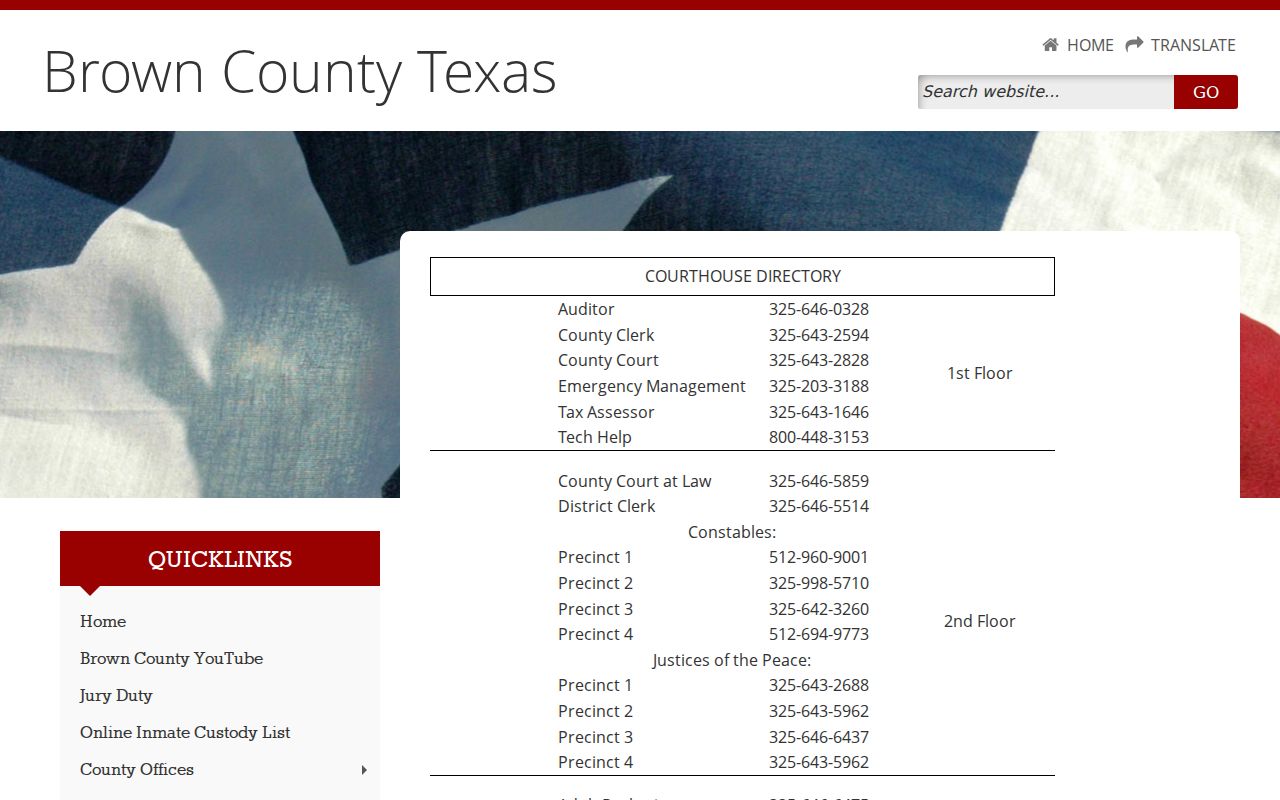
Use the directory to confirm the custodian and phone number before traveling. The compact geography helps, but each office controls only its own records.
Official Background Checks in Texas
The Texas Department of Public Safety keeps the central criminal-history repository. Its public Criminal History Conviction Name Search covers the public conviction and deferred-adjudication set. It costs one search credit, and a credit is used even when there is no match. Credit-card purchases add the stated processing charges. The result is name based, so a similar name is not biometric proof.
For self-review, follow the DPS fingerprint service instructions and enroll through IdentoGO with the correct service code. Licensing and certain volunteer roles may require a statutory fingerprint channel, but the agency that requires it must supply the right code. Do not substitute a public name search.
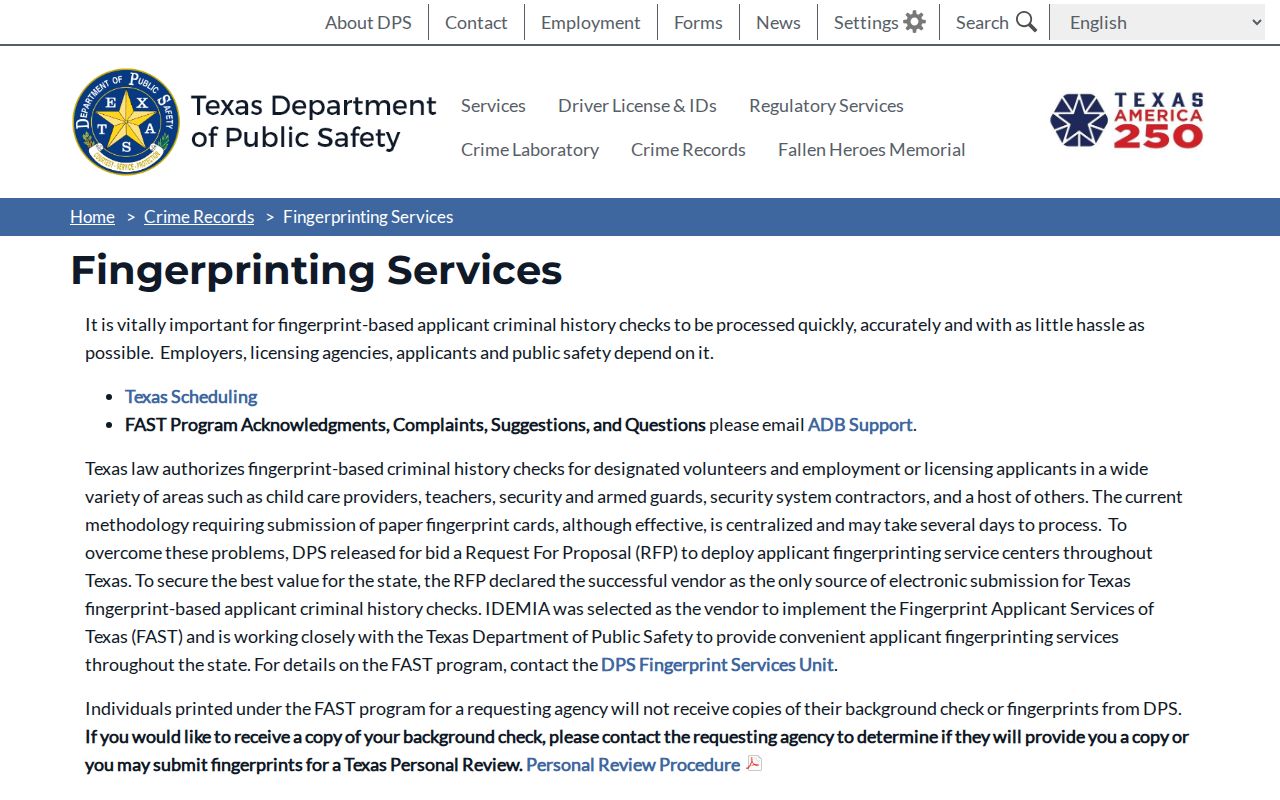
The DPS fingerprint page is also the starting point for challenging an error in your own Texas criminal history.
Brown County Name Search Choices
Three products answer different questions. The DPS public name search is statewide but limited to public criminal-history information. Brownwood Police provides a free local history that covers City of Brownwood data only. A fingerprint review connects your identity to the broader subject record DPS is authorized to return to you.
| Channel | Identity basis | Coverage | Published cost |
|---|---|---|---|
| DPS public search | Name and identifiers | Public Texas conviction and deferred data | $1 credit plus card charges |
| Brownwood Police | Local name records | City of Brownwood only | No charge listed |
| DPS personal review | Fingerprints | Your own Texas CHRI | Shown during enrollment |
The DPS Crime Records Division describes repository services and limits.
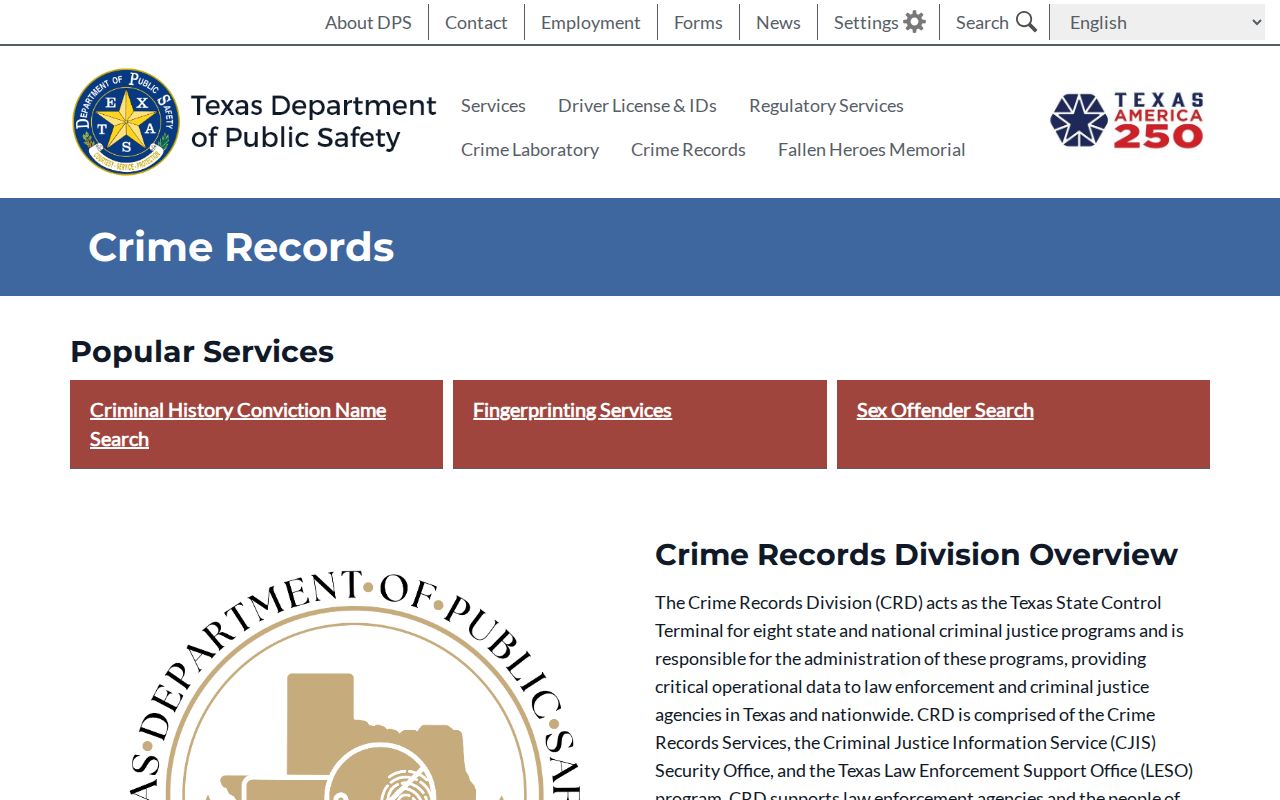
Compare a DPS entry with the originating clerk when the final disposition matters.
Kinds of Brown County Criminal Records
Each Brown County criminal record reflects one step in a longer process. Police create incident and arrest reports. Jail intake creates booking and custody fields. Prosecutors file charges, and clerks maintain the docket, orders, judgment, sentence, and costs. DPS joins reported arrest cycles to later prosecution and disposition submissions. A warrant belongs to the issuing court and law enforcement systems, while probation and parole are separate supervision layers.
Knowing the record type prevents false conclusions. A booking allegation can change before filing. A public docket may show a hearing without the full pleading. An old sentence does not prove active parole or probation.
- Arrest and booking records: show the arresting agency, intake, submitted charge, bond, and custody.
- Court case files: show filed charges, events, pleas, orders, disposition, and sentence.
- DPS criminal history: links reported identity and arrest cycles with later agency submissions.
- Warrants: may be sealed, unexecuted, juvenile, or otherwise absent from public tools.
- Supervision and registry records: come from CSCD, TDCJ, courts, and the Texas registry.
When the Brown County Roster Fails
The Brown County inmate roster endpoint was not accessible during research. Do not treat a timeout as proof that no one is held. Call the jail at 325-641-2481, ask about current custody, and use VINELink for notification rather than as the sole official record. A targeted public-information request can seek releasable booking material when a live profile cannot be viewed.
Expected jail data may include booking number and time, arresting agency, charge submitted at intake, bond, and release status. The actual public display fields could not be verified, so no claim is made about mugshots, housing units, magistrate fields, or result limits. For a fuller explanation, use the Brown County arrest search.
Brown County Criminal Records: What They Contain
A Brown County court record centers on the cause number, court, filing date, counts, docket events, outcome, sentence, and financial ledger. A jail entry instead centers on booking and custody. DPS organizes identity-linked arrest cycles and later submissions. Public copies can redact Social Security numbers, full birth dates, account numbers, minor identities, sensitive victim details, and protected addresses.
| Name & Identifiers | Legal name, aliases, birth data, and agency identifiers, subject to public redaction. |
|---|---|
| Arrest / Booking Data | Agency, date, tracking number, intake charge, bond, and custody facts. |
| Charges & Statutes | Alleged or filed counts and the Texas law cited for each. |
| Disposition | Dismissal, acquittal, conviction, deferred adjudication, or another recorded result. |
| Sentence | Jail or prison term, fine, restitution, or community supervision ordered by the court. |
| Custody / Supervision Status | County custody, TDCJ status, or a court judgment showing community supervision. |
Brown County Warrants Need Four Paths
Brown County has no verified public countywide warrant search. The jail list is not a warrant database, and re:SearchTX does not establish current warrant status. Call the Sheriff at 325-646-5510 or submit a focused request for releasable information. For a felony capias, contact the District Clerk. County misdemeanor warrants run through the County Clerk and County Court at Law.
City matters stay with their issuing court. Brownwood Municipal Court lists 325-646-6947 and the City Marshal lists 325-642-2454. Early and Bangs each require a call to the local court because no public lookup was found. Ask what appearance, bond, or payment is required, check for every hold, and obtain written proof of clearance. A payment receipt alone may not show that a warrant cleared.
Texas Public Access Laws
The custodian determines the access rule. Executive-agency reports generally use the Texas Public Information Act. Filed court records come from the clerk under judicial-record and court-access rules. DPS criminal history follows separate dissemination limits, while expunction, nondisclosure, and registry data each have their own statutes.
Key Statutes:
Government Code Chapter 552 sets the request, exception, cost, and ruling framework for executive agencies.
Government Code Sections 411.083-.087 control DPS criminal-history confidentiality and dissemination.
Rule of Judicial Administration 12 governs judicial-record requests.
Code of Criminal Procedure Chapter 55A defines Texas expunction procedure and eligibility.
Brown County Police Report Fees
Brownwood Police publishes the clearest local fee and request path. It asks readers to wait at least two business days after an event. Public arrest and offense reports and the city-only local history carry no listed charge. Crash reports cost $6. Standard paper copies are generally $0.10 per page, while qualifying labor may cost $15 per hour.
| Brownwood record | Published charge | Limit |
|---|---|---|
| Public arrest report | No charge | Redactions apply |
| Public offense report | No charge | Public copy only |
| Local criminal history | No charge | City records only |
| Crash report | $6 | Separate from case disposition |
Call the Sheriff for current report or certification costs because an official local fee was not found.
Restricted, Sealed & Expunged Records
Texas expunction and nondisclosure have different effects. Chapter 55A expunction can require removal or destruction of qualifying arrest records, but only when each statutory condition is met. Nondisclosure usually limits ordinary public access while specified government and licensing bodies retain access. Juvenile files, victim-sensitive facts, medical material, sealed warrants, and active investigations can also be restricted without either remedy.
Start with the Brown County clerk that holds the case. The District Clerk handles felony district-court matters, and the County Clerk handles county-court matters. Ask for current filing, service, and certified-copy fees because no final local expunction total was published. After an order, keep certified copies and verify processing with every named agency, then review your DPS record again.
Brown County Custody Versus Prison
Brown County Jail holds local and pretrial custody. The Texas Department of Criminal Justice holds state prison information. Searching one does not search the other. The TDCJ Inmate Search accepts a name or agency number and may display status, unit, offense, county, sentence date, and projected release data.
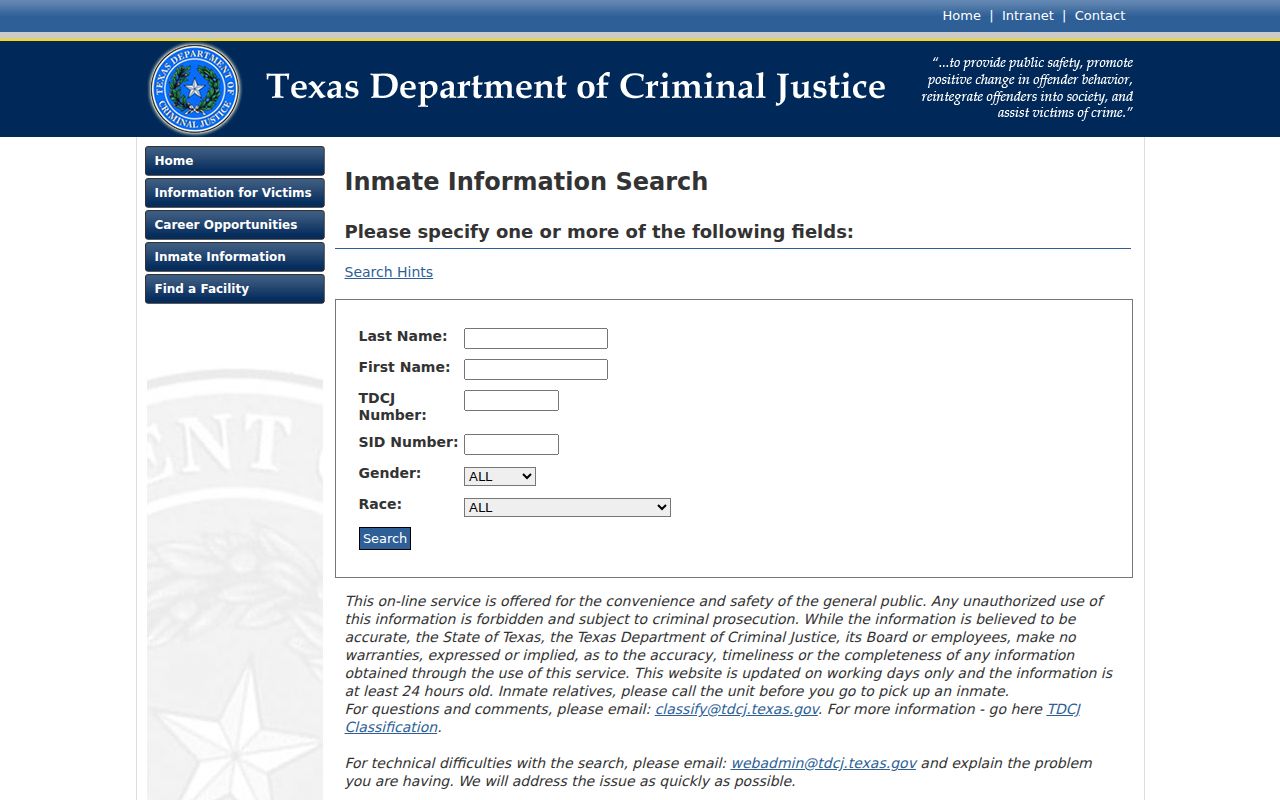
A projected date is an agency calculation, not a promise. Read parole eligibility separately from projected release.
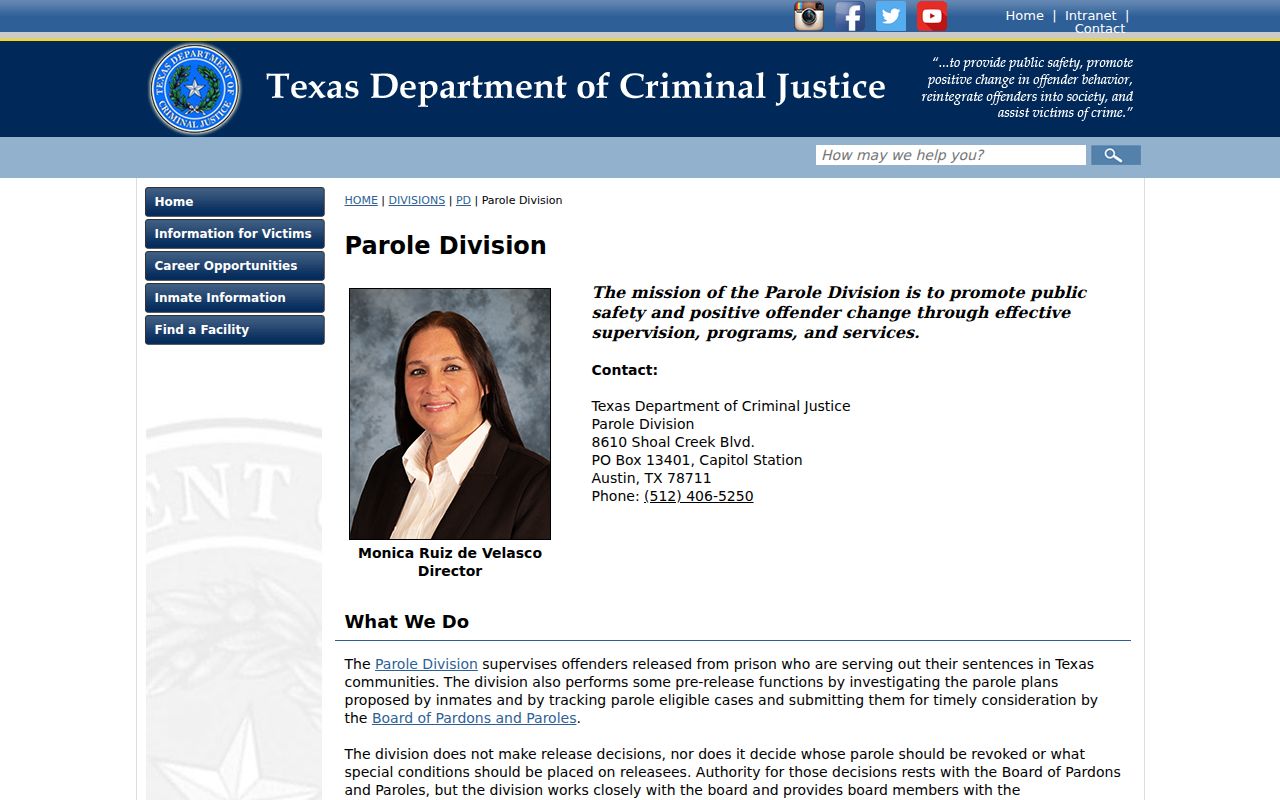
The TDCJ Parole Division supervises parole, while the Board of Pardons and Paroles makes release and revocation decisions.
Brown County CSCD handles local community supervision. An old judgment alone does not prove that supervision remains active.
Brown County Fingerprint Review
Use fingerprint review when checking or correcting your own Texas record. DPS instructions supply the required service code, and IdentoGO enrollment displays the appointment charge. Bring the identity documents required for that service and keep the transaction receipt.
If an arrest cycle or disposition is wrong, obtain certified support from the agency or court and follow DPS challenge instructions. A clerk corrects its own file; DPS corrects repository data.
City-by-City Criminal Records in Brown County
Brownwood, Early, and Bangs police create their own reports, while each municipal court keeps fine-only city cases. Higher charges move to Brown County jail and county or district court. The city pages keep local forms, counter rules, and schedules separate.
Brownwood Record Check
18,862 · Free public reports and a municipal docket channel
Early Record Check
3,087 · Tracked open-records requests and local checks
Bangs Record Check
1,520 · Written city requests and first-Tuesday court
Brown County Justice Geography
Brown County spans 944.45 land square miles, yet most records counters are in Brownwood. The 1917 courthouse, designed by Henry T. Phelps, still incorporates an 1884 vault. The historic 1902 jail is a different property and is not the current detention records counter.
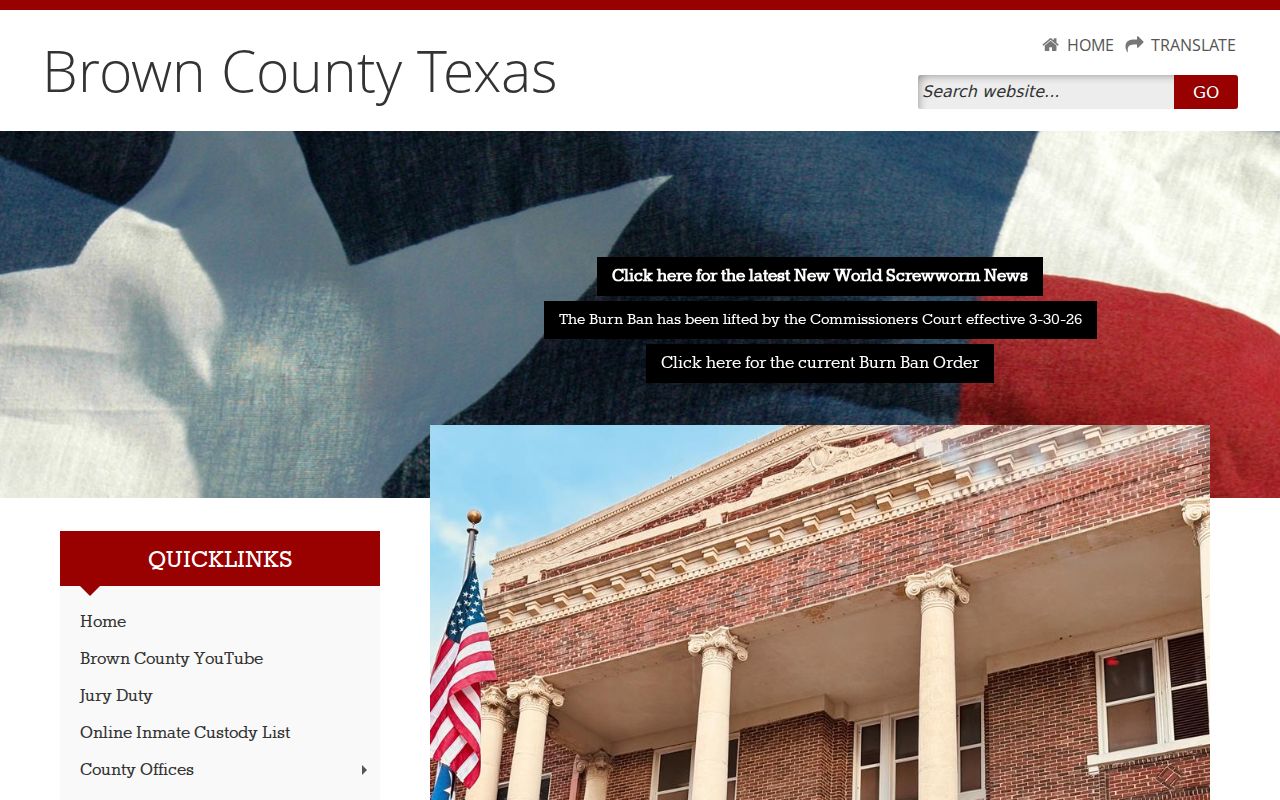
The official Brown County homepage is the safest starting point for current county office links.
Call ahead for accessibility needs and current entry rules. Public county pages do not state one universal parking, phone, or security policy.
The county's broad rural footprint makes phone and written request options useful for people outside Brownwood. Brownwood Police accepts online, mail, fax, and counter requests. Early routes requests through its city coordinator by email, mail, or counter and assigns a tracking number. Bangs uses a written City Secretary route because no dedicated police form was found. Sheriff requests go to the Law Enforcement Center. State records remain available through DPS and TDCJ channels, so travel is not always needed. Before sending a request, name the agency, event date, location, record type, and known case or incident number. That detail helps staff identify responsive material and gives a better basis for a fee estimate.